
 Search
 Mt. Hood: A Four-Season Adventure Guide
Oregon’s tallest peak sits an hour from Portland — and offers year-round outdoor adventure.
A little more than an hour east of Portland stands Mount Hood, Oregon’s tallest mountain at 11,250 feet (3,430 meters) above sea level. Truly an iconic destination that’s beloved for four seasons of outdoor adventure, Wy’east, as it’s called in Native American traditions, has been a source of inspiration, fascination and sustenance since time immemorial.
If you’re considering a trip to Mt. Hood, here’s everything you need to know to get inspired and start planning. (Be sure to request a free travel guide from Oregon’s Mt. Hood Territory — teeming with ideas for parks, overnight stays, the area’s best bites and more.)
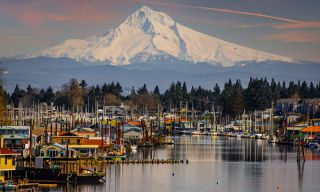
Credit: Jon Kraft
Mount Hood 101: Routes, Towns and Seasons
As seen from Portland’s skyline, Mt. Hood is both a part of our city and a wonderland all its own. Learn the basics of the mountain for easy travel, wardrobe and destination choices.
Know Before You Go
Before starting your trip to Mount Hood, check the National Weather Service’s website for up-to-date information on current snow conditions and weather advisories that may be in effect. For current travel advisories and road conditions on the route to Mount Hood, visit the Oregon Department of Transportation’s Trip Check website.
How to Get to Mount Hood (and How Long It Takes)
Visitors from Portland, Oregon, have two realistic options for reaching Government Camp, the highest community on Mount Hood and a hub of year-round recreation. Both pass most of Mount Hood’s best-loved attractions, on well-maintained highways that commonly require snow tires or traction devices in the winter months.
The most direct route measures about 60 miles (97 km) and takes 70–90 minutes via Interstate 84 and Highway 26. A more meandering trip follows Interstate 84 eastbound through the Columbia River Gorge and Highway 35 southbound through the Hood River Valley; from Portland, this 105-mile (170 km) trip takes roughly 2 hours. (Travel times vary due to traffic and weather.) Both routes comprise portions of the broader Mt. Hood Scenic Byway, which is beloved for its views, cultural attractions and easy access to outdoor adventure.

Credit: Mt. Hood Territory
For car-free travel, consider the Mt. Hood Express, which travels daily between the city of Sandy, east of Portland, and Timberline Lodge on Mt. Hood (with stops at popular resorts and ski areas along the way). Round-trip transportation between ski areas, from Portland and from the Columbia River Gorge, is also available at a few resorts. Learn more about car-free travel to Mount Hood.
Planning for Mount Hood Weather
Government Camp receives about 22 feet (6.7 m) of snow yearly, mostly between November and April. The Mt. Hood ski resorts are higher and receive more snow, of course. If planning a winter visit, wear several layers to stay warm; be sure to pack gloves, a hat and thick socks.
Summers on Mount Hood are mostly sunny — with high temperatures ranging from 60F to 80F (15.6C to 26.7C). If camping, pack a light jacket for brisk summer and fall mornings.
Mount Hood’s Mountain Communities
The first community you’ll encounter east of the Portland region (and along Highway 26) is Sandy, an Old West-inspired city where outfitters provide gear rentals and sales year-round — and where several restaurants offer après- (or pre-) ski fare. Grab breakfast at Joe’s Donut Shop; the old-timey staple has been fortifying skiers since 1974.
Further east are the Villages of Mount Hood, a collection of communities (including Welches, Zig Zag and Rhododendron) with overnight accommodations, groceries and roadhouses serving down-home fare. Where Highway 26 reaches its highest point on Mount Hood (4,000 feet/1,219 m), the town of Government Camp hosts a few outfitters, bars, restaurants and lodging options.
Frequently Asked Questions
Where is Mount Hood?
How far is Mount Hood from Portland?
How tall is Mount Hood?
Is Mt. Hood an active volcano?
When did Mount Hood last erupt?
What’s the weather like on Mount Hood?
Why is it called Mount Hood?
Outdoor Recreation on Mount Hood
Know Before You Go
The Oregon Sno-Park permit is required to park in designated winter recreation areas between Nov. 1–Apr. 30, while the Northwest Forest Pass is required at most hiking trailheads in Mt. Hood National Forest. Passes are commonly available at mountain convenience stores, local REIs and other outfitters.
While its cozy lodging and welcoming bars and restaurants might beckon you indoors, Mt. Hood is beloved first and foremost for its year-round outdoor recreation. Winter snowsports and summer hiking, biking and water activities keep adventure seekers coming back in all seasons.
For those seeking guidance or simplified transportation, several tour companies serve Mt. Hood, offering a range of options from sightseeing to snowshoeing.
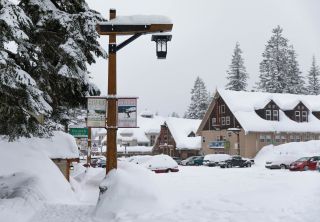
Credit: traveloregon.com
Skiing, Snowshoeing and Sledding
With a ski and snowboard season that typically runs from December through April, Mount Hood transforms into a winter wonderland with fresh powder at five ski areas. While Mt. Hood Meadows is the largest ski resort on the mountain, Timberline offers the longest season and Mt. Hood Skibowl boasts the United States’ biggest night skiing terrain.
Cross-country skiers and snowshoers heading to Mount Hood have plenty of backcountry to cover; popular trails include the lollipop-shaped loop around Trillium Lake and nearly 15 miles (24 km) of groomed cross-country skiing trails at Teacup Lake Sno-Park.


Sledding and tubing options abound, with great slopes scattered from Snow Bunny at Government Camp to Timberline’s Summit Pass and White River Sno-Park. Check out Mt. Hood Skibowl for weekend cosmic tubing.
Hiking, Biking and Water Activities
When the weather warms up, daytrippers flood to Mt. Hood’s many waterfall hikes, including Tamanawas Falls and Ramona Falls. Wildflower seekers head for Elk Meadows. The iconic Pacific Crest Trail traverses Mt. Hood’s slopes on its route from Mexico to Canada. Dayhikers and backpackers alike enjoy its rugged but well-maintained scenery. Ambitious hikers tackle the 41-mile (66 km) Timberline National Historic Trail, which circles Mount Hood.
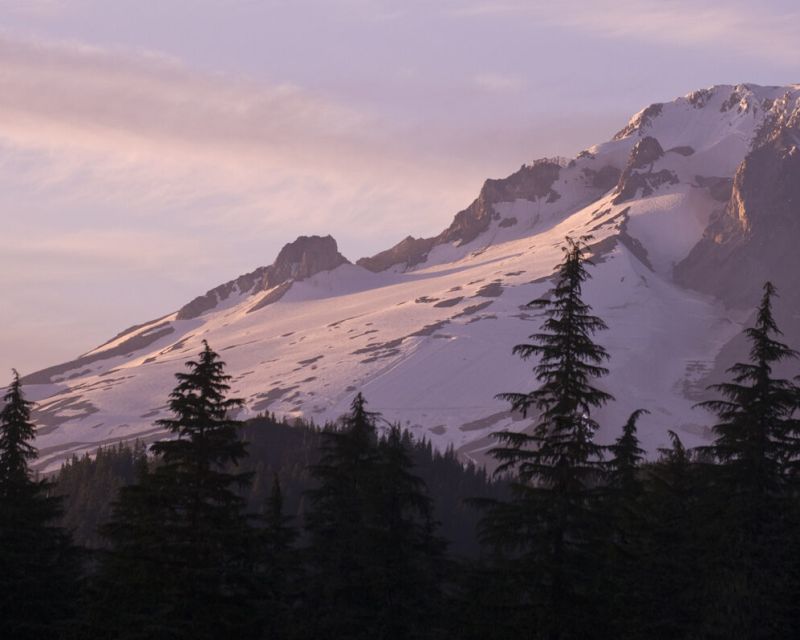
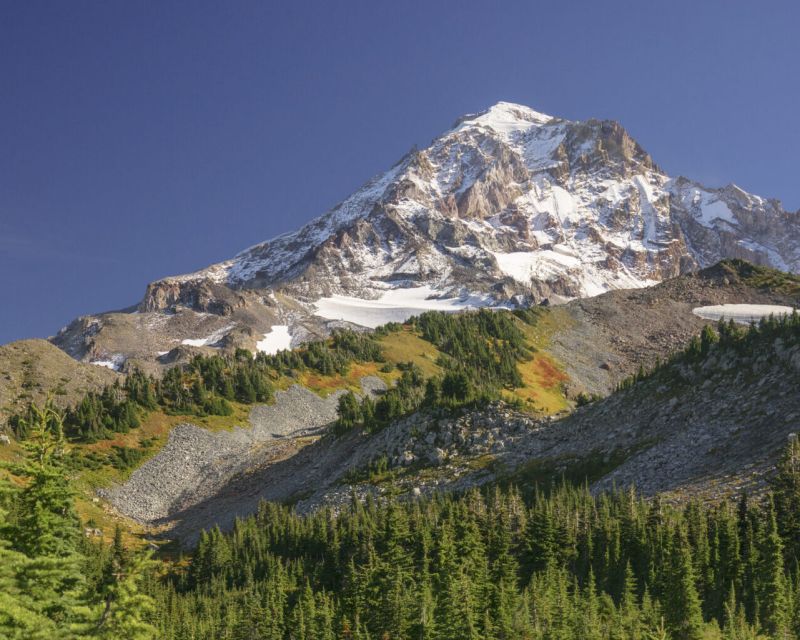
Mountain bikers shred the paths at Sandy Ridge Trail System — home to 17 miles (27 km) of trails for riders of all skill levels. Both Mt. Hood Meadows and Timberline offer summer mountain biking terrain and lift rides.
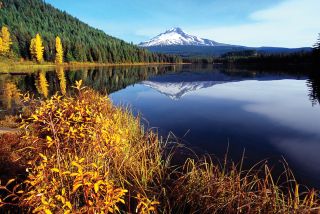
Paddlers rent kayaks and stand-up paddleboards from Mt. Hood Outfitters and enjoy dramatic peak views from Trillium Lake and Timothy Lake.
Credit: Courtesy of Oregon’s Mt. Hood Territory
Hike the kid-friendly, 3.8-mile (6.1 km) (round-trip) Old Salmon River Trail for a sampling of what makes Mount Hood so magical in the fall. Maple trees turn brilliant shades of orange, yellow and red in October — and spawning salmon can be seen beneath the river’s glassy surface. Other opportunities to watch migrating salmon come at Wildwood Recreation Site, where a 0.75-mile (1.2 km) loop trail leads to underwater viewing panels in the Salmon River.
More Fun Around Mount Hood
Beyond outdoor recreation, visitors enjoy Mt. Hood for its varied and unique offerings. Believers (and those soon to be) flock to the North American Bigfoot Center, where Murphy, the life-sized bigfoot replica, is surrounded by evidence and historical artifacts in a museum setting with a gift shop. The scenic Mount Hood Railroad offers picturesque train rides and railbike excursions, while the Hood River Fruit Loop is a popular driving route for seasonal orchard-fresh fruit and stunning views.
Where to Stay on Mount Hood
Overnight stays on Mount Hood run the gamut from basic campgrounds in stately forests to elegant resorts and lodges around Government Camp. Here are a few favorite stops.


Timberline Lodge, constructed in the 1930s as part of President Franklin D. Roosevelt’s Civilian Conservation Corps program, offers an upscale, alpine-inspired experience that includes a massive stone fireplace in the lobby, impressive views of Mount Hood’s snowy summit, a handful of on-site eateries and a heated outdoor pool and tub. (Fun fact: Timberline Lodge served as the exterior of the Overlook Hotel in Stanley Kubrick’s 1980 film “The Shining.”)
A little further down the mountain, the family-run Huckleberry Inn hosts 16 guest rooms for groups of up to 10.
Mt. Hood Camping
More than 75 campgrounds are scattered throughout the vast Mt. Hood National Forest, so camping is a popular summertime pastime. A few favorites include Tollgate Campground (where the rushing Zigzag River drowns out noise from nearby Highway 26) and Hoodview Campground at Timothy Lake — where impressive views of Mount Hood await. Most campgrounds offer both first-come, first-served and reservable sites, with reservations available six months in advance through recreation.gov.
Where to Eat on Mount Hood
You’ll find plenty of options to fuel up for the day’s adventure — or to celebrate the memories you made.
In Government Camp, The Ratskeller has specialized in hearty pizza and regional craft beer since 1963. Further down the mountain, several casual eateries and roadhouses dish filling fare — often in the shadow of leafy back patios. Skyway Bar and Grill specializes in barbecue, offering a brisket that’s smoked for 14 hours, and a “Magical Mystery” sauce with a recipe that changes daily. Wraptitude, meanwhile, dishes a mix of filling burgers and wraps — and Pub 26 serves elevated takes on casual bar fare, which never tastes better than on the spacious back patio.
History of Mount Hood
Mount Hood, part of the broader Cascade Range, has been active for at least 500,000 years. It has gone through three major eruptive periods in the past 1,500 to 2,000 years — with the most recent occurring in the late 1700s and early 1800s. Today, the mountain shows no sign of imminent eruption and is completely safe for visitors.
For generations, members of the Confederated Tribes of Grand Ronde and Confederated Tribes and Bands of the Yakama Nation held religious ceremonies, foraged for huckleberries, traveled and hunted for deer and elk on its forested slopes. More recently, emigrants on the Oregon Trail traversed Mt. Hood’s ridgelines and forests via the Barlow Road, built in 1846 to provide safe passage to Oregon City. In the early 1900s, portions of the toll road were incorporated into the construction of Highway 26.
Today, visitors wishing to learn more about the mountain’s history can find skiing, mountaineering, geology, and pioneer history exhibits at the Mt. Hood Cultural Center & Museum in Government Camp. Those visiting Timberline Lodge experience a living museum of President Roosevelt’s 1930s Works Progress Administration (WPA) history, while backpackers, foragers and skiiers alike get to enjoy the same trails and waterways shared from past to future generations on a mountain that will outlive us all.
More Adventure
Find attractions and activities beyond Mt. Hood with these outdoor recreation ideas.

Waterfalls Near Portland
Portland, Oregon is surrounded by naturally scenic waterfalls, with cascading natural wonder in the Columbia River Gorge, Willamette River and the Cascade Mountain Range.
What to Do in the Columbia River Gorge
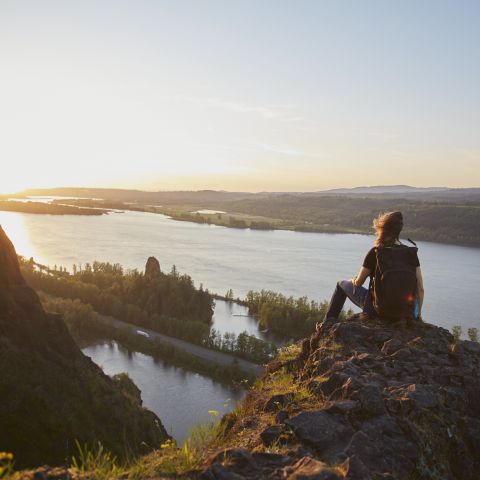
Just 30 miles (48 km) east of Portland sits the Columbia River Gorge — a rugged canyon on the broad Columbia River and home to more than 90 waterfalls, countless hiking trails, plenty of water sports and several charming communities.

Fishing Near Portland
These four waterways — all less than an hour away from Portland — provide the perfect setting for your next fish tale.
Was this page helpful?