
 Search
Multnomah Falls
Oregon’s tallest waterfall is a year-round attraction for all ages and abilities.
Oregon is a state where water regularly flows down from on high. Multnomah Falls — all 620 feet (189 m) of it — stands above the rest as Oregon’s tallest waterfall.
Located just 30 miles (48.3 km) east of downtown Portland along the Historic Columbia River Highway, the two-drop cascade attracts visitors of all ages and abilities with paved trails and wheelchair-accessible viewing platforms. Steep hiking trails lead all the way to the top and the upper falls. Fed by rainwater and snowmelt, the beautiful waterfall’s steady stream flows in every season, making it a year-round attraction. Built in 1925, the Multnomah Falls Lodge offers excellent views, plus a restaurant, an espresso and snack bar, a gift shop and an interpretive center.
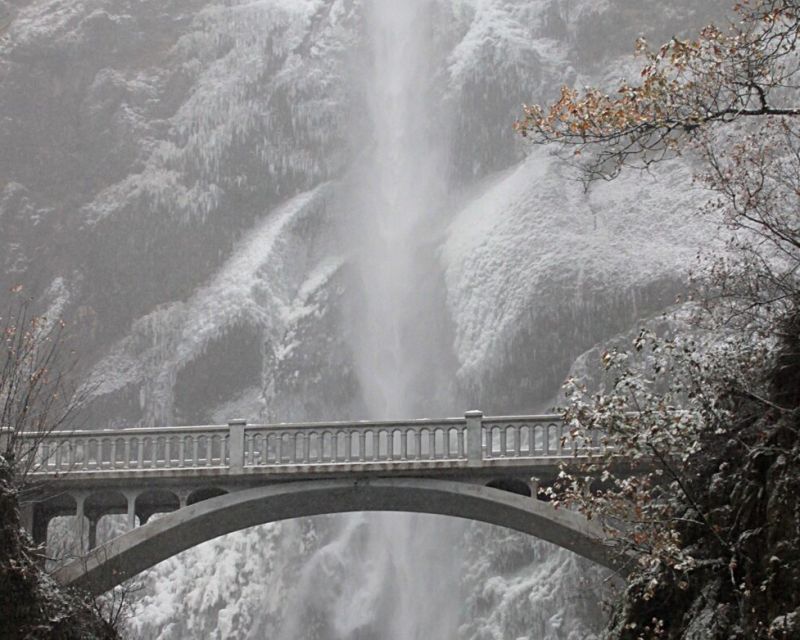

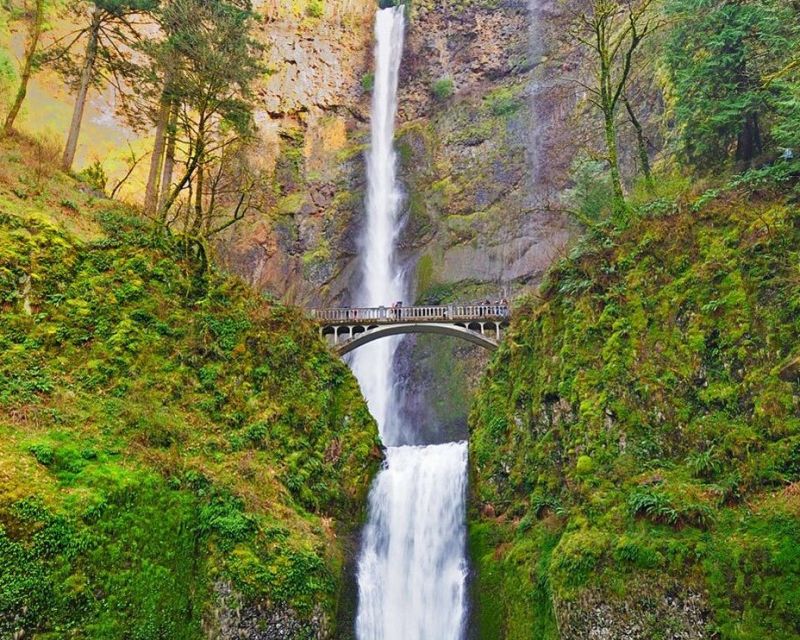
The highest volume of water is in winter and spring. In the height of winter, the waterfall sometimes partially freezes. Before you head out, check with the United States Forest Service (USFS) for the most up-to-date information on alerts, conditions and trail closures.
Multnomah Falls FAQs
Where is Multnomah Falls?
How tall is Multnomah Falls?
How far is Multnomah Falls from Portland?
Are dogs allowed at Multnomah Falls?
How do I get to Multnomah Falls without a car?
Where do I catch the shuttle to Multnomah Falls?
Do I have to pay to see Multnomah Falls?
Getting to Multnomah Falls
Multnomah Falls is located 30 miles (48.3 km) east of Portland in the Columbia River Gorge. It’s an iconic Oregon attraction, drawing over 2 million visitors each year. If you’re driving, there are two main routes to reach the falls: The most direct route is to take Interstate 84 to Exit 31, which takes about 35 minutes without traffic. For a more scenic drive, take the Historic Columbia River Highway, also known as U.S. Route 30 — it’s a winding, picturesque route that takes you past other waterfalls and points of interest, though note that it adds 10–15 minutes of drive time. On both routes, traffic can be heavy at rush hour, on weekends or when the weather’s nice.
Know Before You Go
Travelers should be aware of closures affecting the Historic Columbia River Highway (also known as U.S. Route 30):
– A section of the highway east of Multnomah Falls will be closed for improvements Oct. 6, 2025–spring 2026. Access to the Columbia River Gorge and Multnomah Falls will remain open via Interstate 84. Details are available via ODOT.
– An additional section of the highway is closed between Portland Women’s Forum and Vista House, just east of East Larch Mountain Road, due to safety concerns following recent roadway settling. Through users can continue to use Interstate 84; Northeast Corbett Hill Road and East Bridal Veil Road remain open, allowing access to destinations along the route. ODOT’s Trip Check site can provide the latest information.
The Multnomah Falls parking lot is free much of the year, though note that it is often crowded and fills up quickly. Between Memorial Day and Labor Day, there is a $2 timed-use reservation fee that must be paid online in advance of your visit. A second parking option is a small, privately managed lot on the Historic Columbia River Highway, just across from Multnomah Falls Lodge, that costs $20.
To experience Multnomah Falls without worrying about directions, traffic or parking, consider taking a shuttle or joining a tour. Operators include Sasquatch Shuttle, the Columbia Gorge Express and Gray Line of Portland, among others.
Planning Ahead
Timing Your Visit
As Oregon’s most-visited site, Multnomah Falls is often crowded, especially on summer weekends, when the parking lot frequently fills up. Make a plan days in advance, and remember, a timed-use permit is required daily during the hours of 9 a.m.–6 p.m., from Memorial Day through Labor Day. To get the most out of your visit, we recommend visiting during less busy times (midweek, early mornings), taking a shuttle or taking a guided tour.
What to Wear
Whether you peer up from the bottom or climb to the top of the falls for spectacular views, dress warmly and wear shoes with traction. The waterfall’s spray makes the entire area cool and slick. Dressing for the water also means you’re already prepared for rainy weather if storm clouds happen to roll into the Columbia River Gorge during your visit.
Multnomah Falls Lodge
Built in 1925 and added to the National Register of Historic Places in 1981, the Multnomah Falls Lodge demands a visit. Located at the foot of the falls, its amenities include an espresso and snack shop, a gift shop and a restaurant — open daily, this charming eatery offers breakfast, lunch and dinner, plus a full bar and Sunday brunch. Reservations are encouraged, but not required.
In the lodge’s lower level, you’ll find a USDA Forest Service Information Center where you can pick up a trail map and informative brochures. There are also accessible restrooms.
Hiking Trails & Surrounding Area
There are options for experiencing the stunning falls for all ages and skill levels. Start at the lower-level viewing platform to take in the entirety of the 620-foot (189 m) drop. Then take the short, quarter-mile hike to the Benson Bridge, located between the waterfall’s tiers, where you can gaze up at the towering upper falls. Visitors in the mood for a workout can continue on the 2.4-mile (3.9 km) out-and-back hike to the very top of the falls. At 800 feet (243.8 m) of elevation gain, it’s a healthy climb, but the views from the platform at the top are worth it.
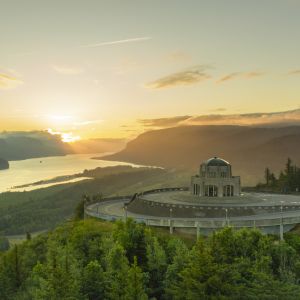
If you’re hungry for more outdoors exploration, there are plenty of options for extending your trip and seeing more of the Columbia River Gorge: You might explore the area’s dozens of other waterfalls, including Latourell Falls, Bridal Veil Falls and Wahkeena Falls. You could head west and check out the Crown Point Vista House, a historic observatory offering spectacular views and opportunities for pictures. Or you could head east to Hood River, a laid-back riverside town known for water sports, strollable streets, and great food and drink.
Gorge Gems
Discover more things to see and do while exploring the scenic Columbia River Gorge.

Was this page helpful?